

Legionella risk assessments for your water systems
Risk assessments to ACOP L8 and HSG274 Part 2, a written scheme your site team can follow, and the monitoring records that show it is working.
A legionella risk assessment identifies where bacteria could grow and spread in your hot and cold water systems, and what you need to do about it. Resilient Consult arranges assessments across Wigan and the North West through assessors who hold the relevant qualifications for water hygiene work, and you see the certificates. We check every report before it reaches you, then help you put the findings into practice: a written scheme of control, a monitoring routine that fits your site and a named responsible person who knows what they are signing off.
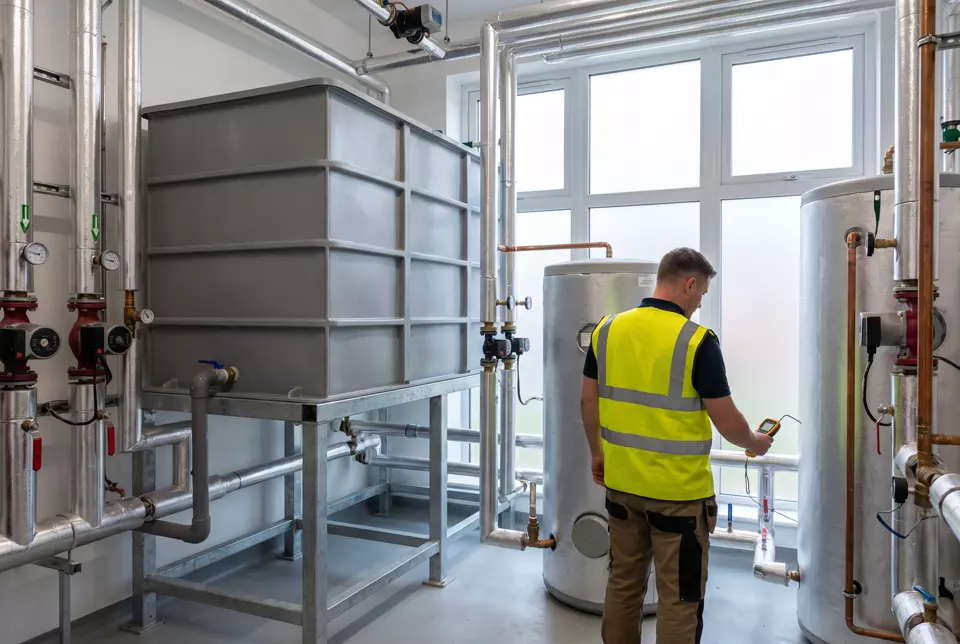
Legionella risk is usually about ordinary things going wrong: a tank without a proper lid, a shower in an empty room, hot water that never quite reaches temperature, pipework left behind after a refit. Offices, schools, care settings, gyms, hotels and blocks of flats all have them. The assessment is the starting point. What keeps people safe is the routine that follows, so that is where we put most of our effort.
Ask for a proposalWhat a legionella risk assessment covers
System survey
An asset list and schematic of tanks, calorifiers, water heaters, outlets and pipework, so everyone knows what the system includes.
Risk assessment
Identification of where water stagnates, sits at the wrong temperature or could be sprayed, and who could be exposed, including anyone more vulnerable.
Written scheme of control
Site-specific instructions covering temperature checks, flushing, cleaning, inspections and what to do when a reading is out of range.
Monitoring and records
Logbooks or digital records for sentinel outlet temperatures, weekly flushing of little-used outlets and periodic tank inspections.
Responsible person support
Help appointing the responsible person and making sure they understand the scheme, their role and when to ask for help.
Remedial works
Removal of dead legs, tank upgrades, cleaning and disinfection arranged through our specialist partners where the assessment calls for them.
ACOP L8, HSG274 and the responsible person
Legionella is a biological agent, so the Control of Substances Hazardous to Health Regulations 2002 apply alongside the general duties in the Health and Safety at Work etc. Act 1974. HSE’s Approved Code of Practice L8, Legionnaires’ disease: The control of legionella bacteria in water systems, explains what those duties mean for water systems. It gives ACOP status to the control scheme and to the appointed competent person known as the responsible person, who manages control measures day to day.
The technical detail sits in HSG274, and Part 2 covers hot and cold water systems. HSE’s guidance includes keeping cold water below 20°C where possible and storing hot water at 60°C so that it reaches at least 50°C at outlets within a minute, or 55°C in healthcare premises. Employers with five or more employees must record the significant findings, and HSE says records should be kept for as long as they are current and for at least two years after. The assessment should be reviewed regularly and whenever something changes.
What you receive
- Legionella risk assessment report with prioritised actions
- Asset register and water system schematic
- Written scheme of control for the site
- Monitoring logbook or record templates
- Responsible person briefing notes
- Remedial works schedule
- Review date and reminder
How it runs
Share the details
Send us the details of the building, how it is used, who occupies it and any previous assessments or records you hold.
Site assessment
A qualified assessor we arrange surveys the system, takes temperatures and inspects tanks and outlets that can be safely reached.
Report and scheme
We check the report, then agree the written scheme, monitoring routine and responsible person with you.
Act and review
We co-ordinate any remedial works, check records are being kept and diarise the next review.
Why use us for legionella compliance
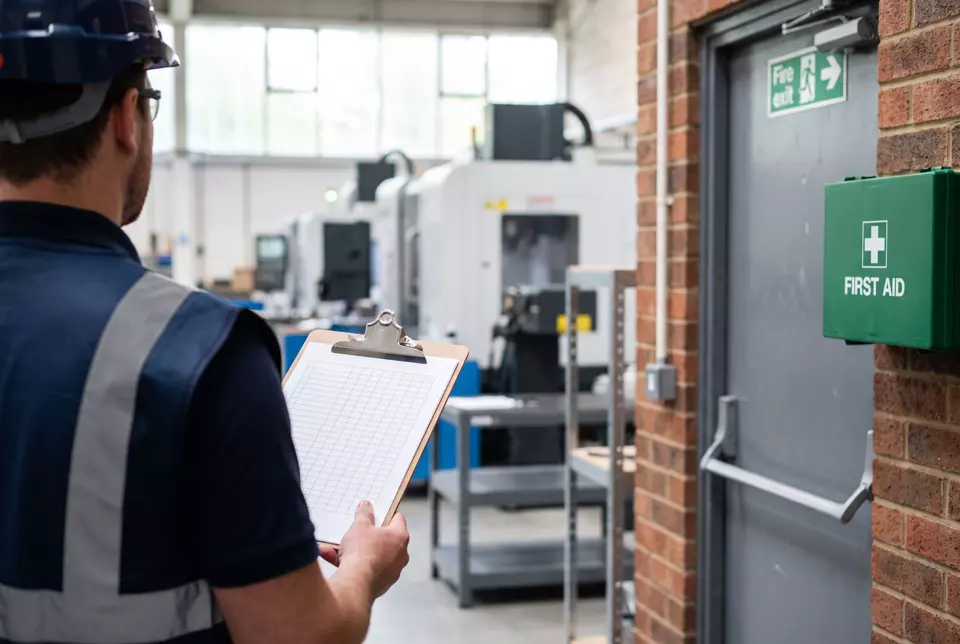
Assessments are carried out by assessors from our specialist partners who hold the relevant qualifications for water hygiene. We stay your point of contact throughout: we brief the assessor, check that the report covers the whole system and that the actions make sense for your building, and turn them into a routine your caretaker or site team can follow without reading the whole report every week.
Where remedial work is needed, we arrange it and check it is finished, so the assessment can be updated to match. If your building also needs a fire risk assessment, asbestos survey or general health and safety support, we can line those up at the same time, keeping one set of records and one person to ask.
Who we do this for
Related health and safety services
-

-
-
Questions about legionella risk assessments
All questionsHow often should a legionella risk assessment be reviewed?
The law does not set a fixed interval. HSE says the assessment should be reviewed regularly and whenever there is reason to think it is no longer valid, for example after changes to the water system, a change in how the building is used, a change of responsible person or poor monitoring results. Your assessor will recommend a review date based on the level of risk found.
Who can be the responsible person?
Someone with enough authority, knowledge and time to manage the control measures day to day, appointed in writing. It is often a facilities manager, site manager or bursar. They do not need to carry out every check themselves, but they must understand the written scheme and know when to escalate. We help you brief them properly.
Do we need legionella testing?
Not always. For most hot and cold water systems, temperature monitoring is the main check that controls are working. HSE says sampling is not usually needed for domestic systems and is used in specific situations elsewhere, such as where controls are not achieving the required temperatures or in some healthcare settings. Your risk assessment will say whether sampling is needed.
What about a building that has been empty?
Stagnant water is one of the biggest risk factors, so empty buildings and rarely used outlets need attention. HSE guidance includes flushing little-used outlets at least weekly. Before a building is reoccupied after a long gap, the system may need flushing, cleaning or disinfection. Send us the details and we will arrange an assessment and any work needed.
Who actually carries out the surveys and works?
We scope, manage and check every job ourselves. Specialist parts, such as fire surveys and remedial works, asbestos surveys, legionella assessments, training and alarm installations, are carried out through vetted specialist partners who hold the relevant qualifications and third-party certification for that work. You see their certificates. We remain your single point of contact and check both the work and the paperwork before it reaches you.
Do you work with contractors?
Yes. We help contractors with risk assessments and method statements, COSHH assessments, written policies and preparation for SSIP schemes such as CHAS, SafeContractor and Constructionline. On projects we can support clients and principal contractors with CDM duties, and we work alongside main contractors when managing fire remedials, so the people on site have clear information and the right paperwork before they start.
Tell us what you need.
What it is, where it is and what you need checked, fixed or managed. You get a scope and a written proposal back.
- adrian@resilientconsult.uk
- Based
- Wigan-based, working across the North West